
Sommaire
Gardening of plants is about much more than putting a plant in the ground and watering it. Healthy garden plants need the right combination of light, soil, water, nutrients, space and regular maintenance.
In Tangier, choosing plants and gardening methods that suit the local environment can make a significant difference. The region has a Mediterranean climate with oceanic influence, so conditions are different from those found in hotter, drier inland areas of Morocco.
The good news is that you can create a healthy and attractive garden by following a few basic principles.
What Is Plant Gardening?
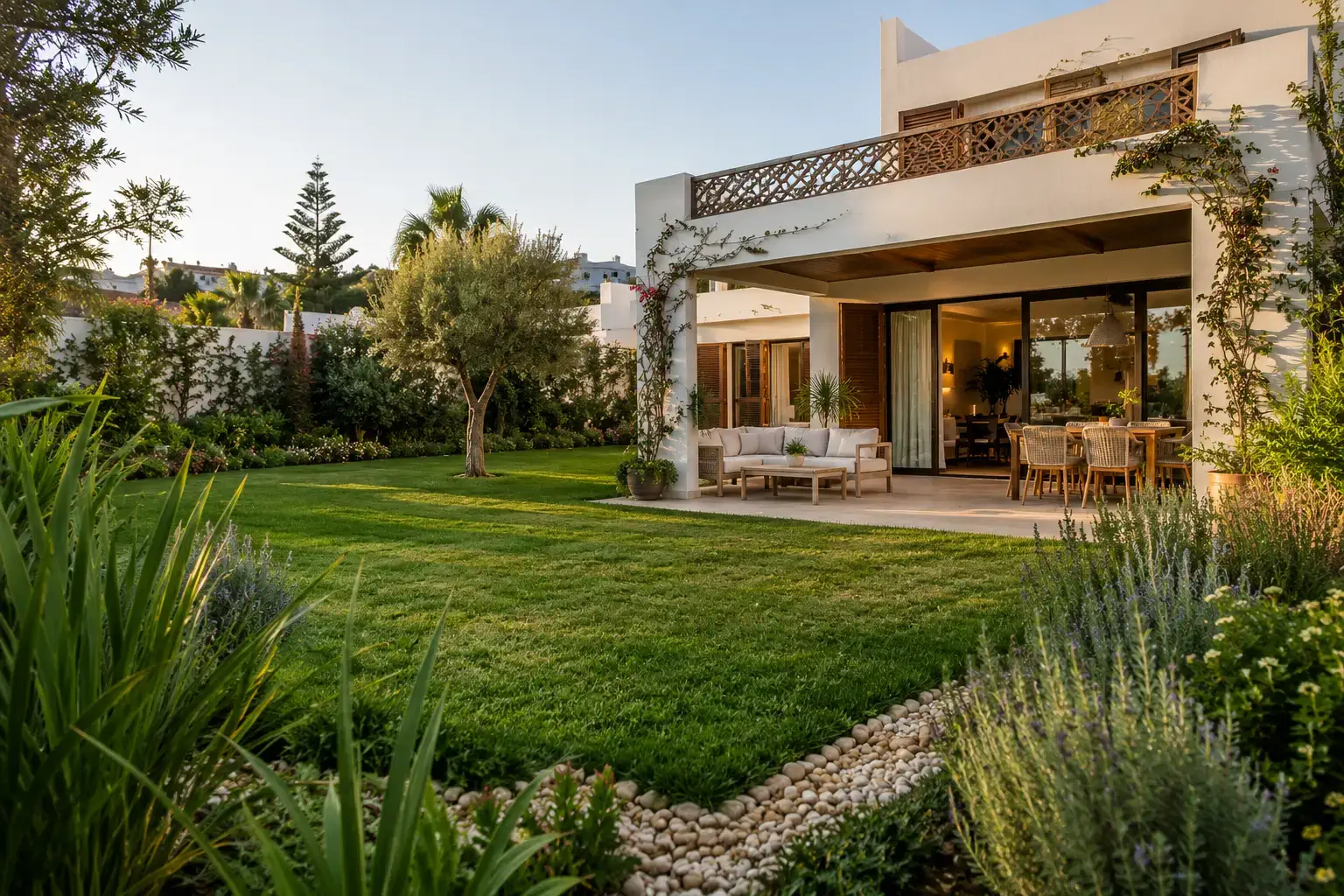
Gardening of plants is the practice of growing, planting and maintaining plants in an outdoor or indoor garden.
It includes several activities:
- choosing suitable plants;
- preparing the soil;
- planting;
- watering;
- pruning;
- fertilizing when necessary;
- controlling weeds and pests;
- protecting plants from unsuitable conditions;
- monitoring plant health.
The most important principle is simple:
Choose the right plant for the right place.
A plant that naturally prefers sunny, well-drained conditions will struggle if it is planted in permanent shade or waterlogged soil. Similarly, a plant that needs consistently moist soil may suffer in a dry, exposed location.
Why Tangier’s Climate Matters for Gardening
The climate should influence nearly every gardening decision.
Successful gardening of plants in Tangier requires adapting plant selection and maintenance to the local climate.
Tanger and the surrounding northern region experience a Mediterranean climate with oceanic influence. The regional development agency reports relatively mild winters and moderate summer conditions along the coast.
That creates opportunities for a wide range of ornamental and Mediterranean-style plants, but it also means gardeners need to consider:
- exposure to sunlight;
- wind;
- summer dryness;
- winter rainfall;
- soil drainage;
- local humidity;
- the specific microclimate of the garden.
Two gardens only a few kilometres apart can also behave differently depending on their orientation, surrounding buildings, shade and exposure to wind.
Sunlight and exposure
Before planting, observe the garden during different parts of the day.
Ask:
- Which areas receive full sun?
- Which areas are shaded?
- Does a wall reflect additional heat?
- Is the garden exposed to strong wind?
- Does water accumulate after rain?
This information is often more useful than choosing plants based only on appearance.
Understanding sunlight exposure is essential for successful gardening of plants.
Water and humidity
Avoid assuming that every plant needs frequent watering.
Water requirements vary considerably by species, soil and season. Established drought-tolerant plants may require much less supplemental irrigation than newly planted specimens.
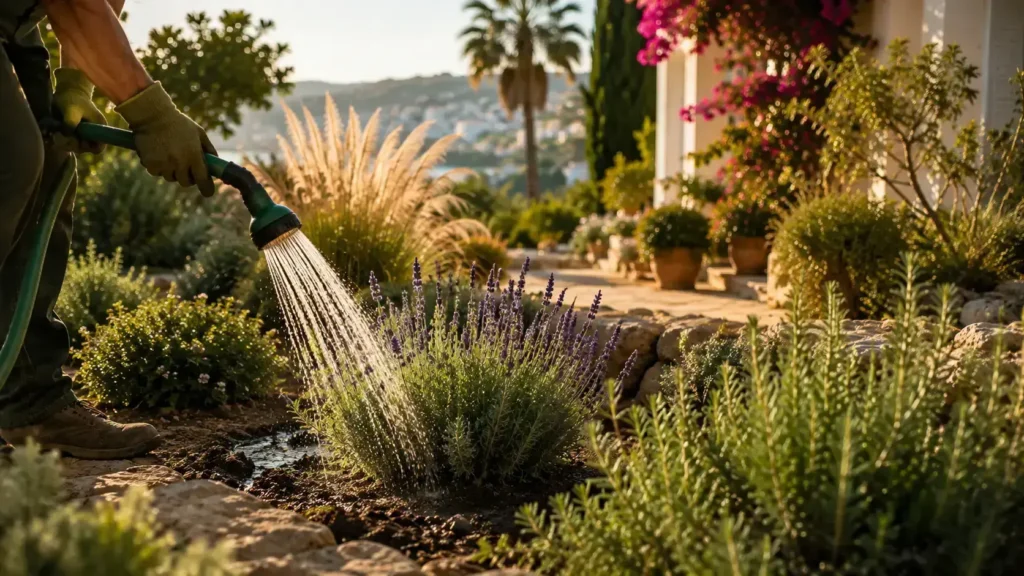
For efficient watering, RHS guidance recommends watering deeply and less frequently rather than relying on frequent shallow watering. Early-morning watering can also reduce evaporation.
Efficient watering is one of the most important parts of gardening of plants.
Soil and drainage
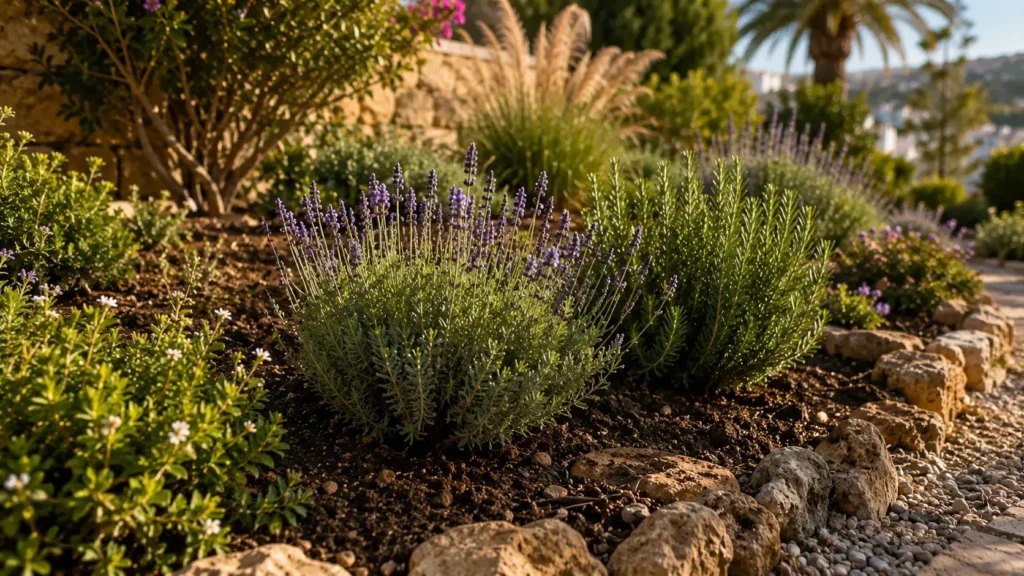
Good drainage is essential for many Mediterranean-style plants.
A soil that remains saturated for long periods can damage roots even when the plant appears to be receiving plenty of water.
Before planting, check whether water drains away naturally after irrigation or rainfall.
Wind and coastal conditions
Tanger’s coastal environment means some gardens can experience significant wind exposure.
For exposed locations, consider:
- wind-tolerant species;
- sheltered planting areas;
- sturdy shrubs;
- appropriate spacing;
- temporary protection for young plants.
How to Choose Plants for a Garden in Tangier
The best plant for gardening of plants in Tangier is not necessarily the most attractive plant at the garden centre.
It is the plant that can thrive in your specific conditions.
Consider five factors before purchasing:
| Factor | Question to ask |
| Sunlight | Does the plant need full sun or shade? |
| Water | Does it tolerate dry conditions? |
| Soil | Does it need well-drained soil? |
| Wind | Can it tolerate an exposed location? |
| Maintenance | How much pruning and care will it require? |
RHS guidance similarly recommends assessing sunlight and soil before selecting drought-tolerant plants.
Plants for sunny areas
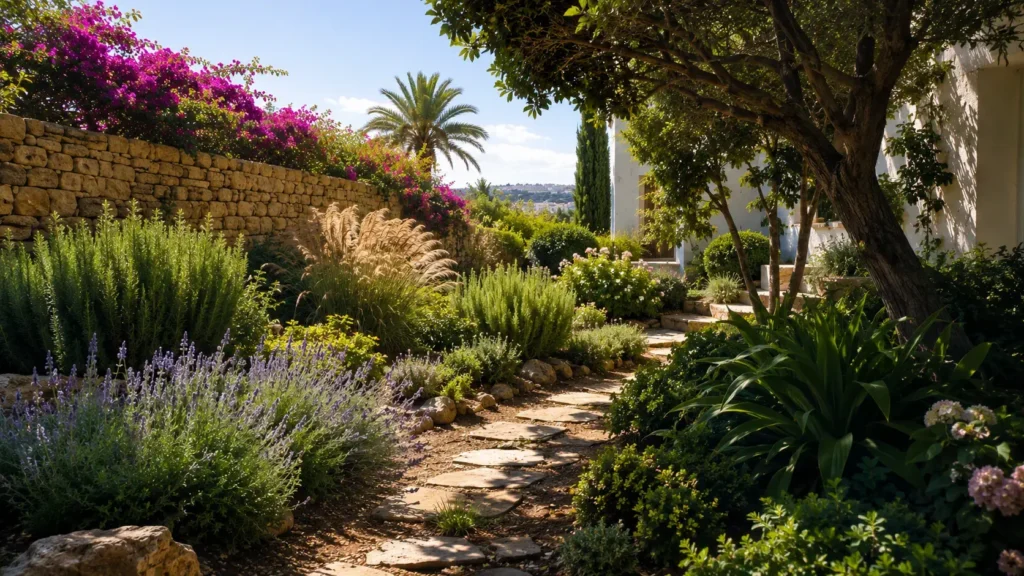
Sunny areas can be suitable for many Mediterranean-style plants, particularly where drainage is good.
Possible choices include:
- lavender;
- rosemary;
- cistus;
- some ornamental grasses;
- bougainvillea;
- selected palms;
- other plants adapted to Mediterranean conditions.
For example, cistus is recognised by the RHS as a drought-tolerant shrub suited to Mediterranean-style and coastal gardens, particularly in full sun and free-draining soil.
Plant selection should still be based on the exact site rather than assuming that a plant will perform identically everywhere.
Choosing plants according to sunlight and soil conditions is an important part of gardening of plants.
Plants for partial shade
Shaded or partially shaded locations require a different approach.
Possible options depend on:
- how many hours of sunlight the area receives;
- whether the shade is dry or moist;
- soil type;
- wind exposure;
- container or ground planting.
Do not automatically place a sun-loving plant in shade simply because the area looks attractive.
Drought-tolerant and Mediterranean plants
Drought-tolerant plants can be useful where reducing irrigation and maintenance is a priority.
However, drought tolerant does not mean “never needs water.”
Newly planted specimens still require appropriate watering while their root systems become established.
How to Plant Garden Plants Correctly
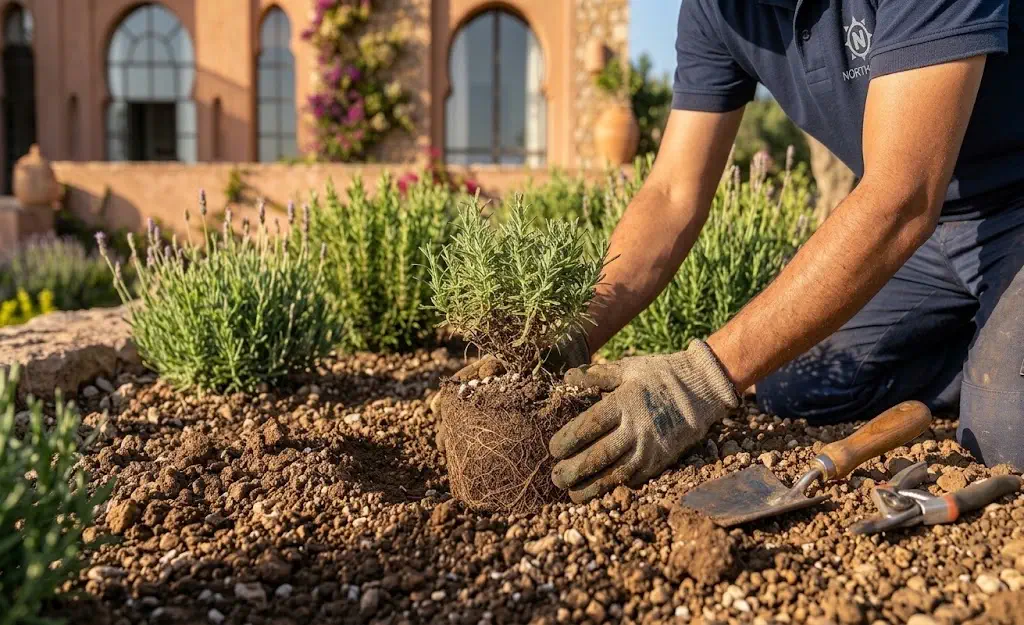
Planting is one of the most important stages of gardening.
Good gardening of plants also depends on giving each plant the right conditions from the moment it is planted.
1. Prepare the soil
Remove weeds and unwanted roots from the planting area.
Then assess:
- drainage;
- soil structure;
- compaction;
- organic matter.
Adding suitable organic matter can improve soil structure and water retention, depending on the existing soil.
Avoid assuming that more fertilizer automatically means healthier plants.
2. Choose the right planting location
Check the plant’s expected mature size before planting.
A small plant can eventually become a large shrub or tree.
Leave enough space for:
- roots;
- branches;
- air circulation;
- access for maintenance.
3. Plant and water correctly
After planting, water thoroughly so that moisture reaches the root zone.
New plants generally require more attention during their establishment period than mature plants.
Avoid creating permanently waterlogged conditions.
4. Add mulch
Mulch is a simple tool that can improve garden management.
Organic mulch can:
- reduce evaporation;
- suppress weeds;
- moderate soil temperature;
- contribute organic matter as it decomposes.
These benefits are supported by horticultural extension guidance.
Keep mulch away from direct contact with plant stems and tree trunks.
These simple practices can make gardening of plants more efficient and sustainable.
How to Care for Garden Plants
Once plants are established, maintenance becomes much easier when it follows a consistent routine.
Regular care is an essential part of successful gardening of plants, especially during periods of heat or limited rainfall.
Watering
Check the soil before automatically watering.
The correct frequency depends on:
- plant species;
- soil type;
- container or ground planting;
- season;
- exposure;
- recent rainfall;
- wind.
When irrigation is necessary, applying water directly to the soil around the root zone is generally more efficient than repeatedly wetting the foliage.
A useful rule is:
Water according to the plant and soil conditions, not according to a fixed calendar alone.
Pruning
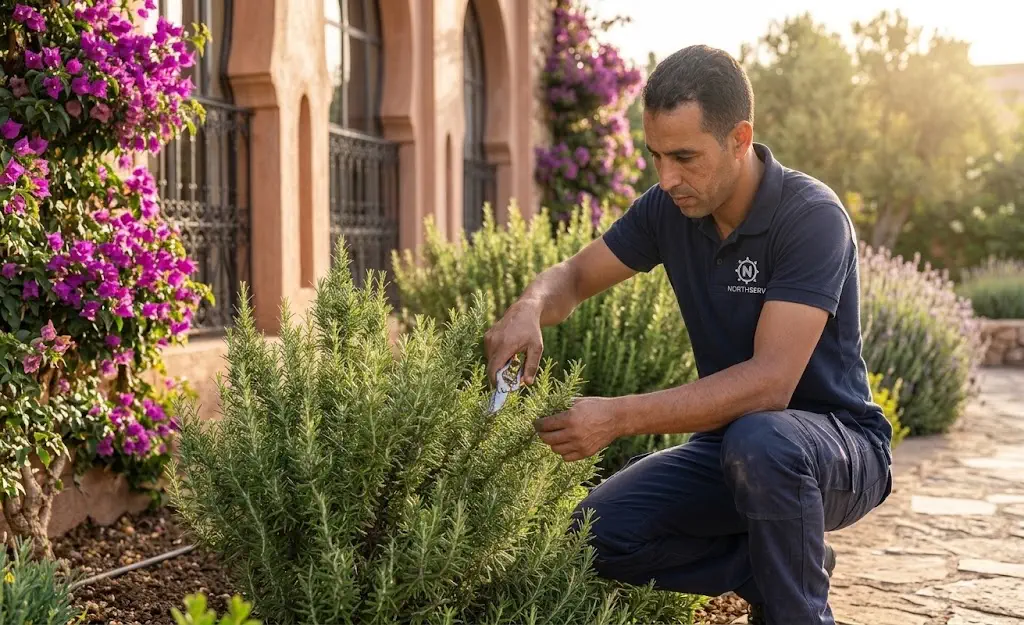
Pruning can help:
- maintain shape;
- remove dead or damaged growth;
- control size;
- improve structure;
- encourage appropriate new growth.
But pruning requirements vary by species.
Proper pruning can make gardening of plants easier while keeping plants healthy and well structured.
Avoid treating every shrub or tree in the same way.
Fertilization
Plants need nutrients, but fertilizer should not be used as a substitute for healthy soil and suitable growing conditions.
First investigate whether poor growth is caused by:
- inadequate light;
- poor drainage;
- insufficient water;
- excessive water;
- unsuitable soil;
- pests or disease.
Only then consider whether additional nutrients are necessary.
Weed and pest management
Regular observation is one of the simplest forms of plant protection.
Check leaves, stems and soil for:
- unusual discoloration;
- wilting;
- holes;
- distorted growth;
- insects;
- fungal symptoms.
Early detection makes problems easier to manage.
Mulching can also reduce weed pressure and support soil moisture management.
Regular monitoring makes gardening of plants easier and helps prevent small problems from becoming serious.
Seasonal Gardening in Tangier
Gardening of plants in Tangier should not follow exactly the same routine throughout the year.
Spring
Spring is a good period to:
- inspect plants after winter;
- remove damaged growth;
- prepare planting areas;
- introduce suitable seasonal plants;
- adjust irrigation;
- add appropriate soil amendments or mulch.
Summer
Summer maintenance should focus on:
- monitoring soil moisture;
- watering efficiently;
- checking plants for heat stress;
- controlling weeds;
- protecting newly planted specimens.
Avoid automatically increasing watering for every plant. Established Mediterranean plants can have significantly lower water requirements than newly planted or moisture-loving species.
Autumn
Autumn can be an important preparation period.
Tasks may include:
- removing damaged plant material;
- preparing soil;
- checking drainage;
- planting suitable specimens;
- replenishing mulch;
- reviewing irrigation.
The exact timing should depend on the plant species and local weather.
Winter
In Tanger, winter conditions are generally mild compared with colder climates, but increased rainfall can make drainage particularly important.
Monitor:
- waterlogged areas;
- fungal problems;
- damaged branches;
- soil erosion;
- drainage around trees and shrubs.
Common Gardening Mistakes to Avoid
1. Choosing plants only because they look attractive
A beautiful plant in the wrong environment can become a maintenance problem.
2. Watering everything on the same schedule
Different plants have different water requirements.
3. Ignoring drainage
Too much water can be as damaging as too little.
4. Planting without considering mature size
Small plants can eventually become large shrubs or trees.
5. Overusing fertilizer
More fertilizer does not automatically produce healthier plants.
6. Neglecting the soil
Healthy soil provides the foundation for healthy roots.
7. Ignoring microclimates
A sunny courtyard, shaded balcony and windy coastal garden may require completely different plant choices.
8. Forgetting newly planted plants need extra attention
A drought-tolerant plant may become highly resilient once established, but establishment still requires appropriate care.
A Simple Plant Gardening Checklist
This simple approach makes gardening of plants easier and more effective throughout the year.
Before planting:
- Check sunlight exposure.
- Identify the soil type.
- Check drainage.
- Consider wind exposure.
- Choose a plant appropriate for the location.
- Check the plant’s mature size.
- Prepare the soil.
- Plan irrigation.
- Consider mulch.
After planting:
- Water the root zone appropriately.
- Monitor the plant during establishment.
- Check for pests and disease.
- Remove competing weeds.
- Adjust watering according to conditions.
- Prune only when appropriate for the species.
Regular observation and appropriate maintenance are essential for successful gardening of plants in Tangier.
When Should You Consider Professional Garden Maintenance?
Basic gardening can be managed by many homeowners.
Professional assistance becomes more useful when a garden has:
- many mature trees or shrubs;
- extensive lawns;
- complex irrigation;
- difficult drainage;
- large planted areas;
- recurring plant health problems;
- significant pruning requirements;
- a need for regular maintenance.
For a property in Tanger, a local gardening professional can also help assess the relationship between plant selection, exposure, soil, irrigation and maintenance requirements.
For Northserv, this is the appropriate point in the article to introduce the company’s gardening services without disrupting the informational purpose of the guide.
FAQ About Gardening of Plants in Tangier
What is the most important factor in gardening of plants?
The most important starting point is choosing a plant that matches the conditions of the location. Sunlight, soil, drainage, water requirements and exposure should all be considered before planting.
How often should I water garden plants in Tangier?
There is no single schedule that works for every garden. Watering depends on the plant, soil, season, exposure and recent rainfall. Newly planted plants generally need more attention while they establish, while established drought-tolerant plants may require less supplemental water.
Which plants are suitable for a Mediterranean-style garden?
Plants adapted to Mediterranean conditions can be a good choice, particularly where soil is well drained and exposure is sunny. Examples include lavender and cistus, among others.
Is mulch useful for gardening of plants?
Yes. Properly applied mulch can help regulate soil moisture, suppress weeds and improve soil conditions. Organic mulches can also contribute organic matter as they decompose.
Should I use fertilizer every time a plant grows slowly?
No. Slow growth can have many causes, including insufficient light, poor drainage, incorrect watering or unsuitable soil. Diagnose the underlying problem before adding fertilizer.
Can drought-tolerant plants survive without water?
Not necessarily. Drought-tolerant plants can require regular watering during establishment. Once their roots are established, many can tolerate considerably drier conditions.
Is gardening of plants possible throughout the year in Tangier?
Yes. Tanger’s relatively mild climate allows gardening activities throughout much of the year, although the appropriate tasks depend on the species, season, rainfall and local garden conditions.
With the right approach, gardening of plants can remain simple, practical and adapted to the conditions of Tangier.
Conclusion
Successful gardening of plants starts with understanding the conditions rather than simply following a fixed watering or maintenance routine.
For a garden in Tangier, pay particular attention to:
- plant selection;
- sunlight and exposure;
- soil and drainage;
- efficient watering;
- appropriate maintenance;
- seasonal changes.
The goal of gardening of plants is not to create a garden that requires constant intervention.The better approach is to select plants that suit the site and establish a maintenance routine that works with the local environment.
Good gardening of plants starts with choosing suitable plants and maintaining them according to the conditions of the garden.
Need help keeping your garden healthy and well maintained?
Explore Northserv’s gardening services in Tangier for professional support with plant care, garden maintenance and outdoor spaces.