
Sommaire
Starting a Vegetable Gardening in Tangier can be much simpler than it first appears. You do not need a large plot of land or years of gardening experience. With the right location, healthy soil, appropriate vegetables and a consistent watering routine, a small garden can produce fresh food for much of the year.
For gardeners in Tangier, Morocco, local conditions are particularly important. The city has a mild climate influenced by both the Mediterranean and Atlantic environments, while rainfall is much more concentrated in the cooler months than during summer. WMO climatological data, for example, show substantially higher average rainfall from October through April and very low rainfall in July and August.
That means a successful vegetable garden in Tangier should be planned around seasonality, water management and crop selection rather than simply following a generic gardening calendar.
Why Vegetable Gardening Works Well in Tangier
The wider Tanger-Tétouan-Al Hoceima region already has significant agricultural and vegetable production. Regional agricultural sources identify seasonal vegetable production among the area’s important plant-production activities, alongside crops such as tomatoes, potatoes and onions.
For a home gardener, the important lesson is not that every vegetable will grow equally well, but that the local climate provides opportunities across several seasons.
Understanding Tangier’s climate
To master Vegetable Gardening in Tangier, it is essential to first understand the city’s mild winters and warm summers
Tangier has relatively mild winters and warm summers. According to the World Meteorological Organization’s climatological data, average maximum temperatures are approximately 16.8 °C in January, rising to about 29.7 °C in August. Average rainfall falls dramatically during summer.
For vegetable gardening, this creates two broad considerations:
- Cooler and wetter months: useful for many cool-season crops.
- Hotter and drier months: suitable for warm-season crops but require more careful irrigation.
The exact conditions of your garden can differ significantly from the city average. Exposure, altitude, wind, soil type and nearby buildings can all affect growing conditions.
Choosing the right growing season
Instead of thinking about a vegetable garden as something planted once a year, think of it as a continuous seasonal cycle.
A garden can transition from cool-season crops to warm-season crops and back again.
This approach also reduces the temptation to force a crop into unsuitable conditions.
How to Start a Vegetable Garden
A successful vegetable garden starts with planning rather than planting.
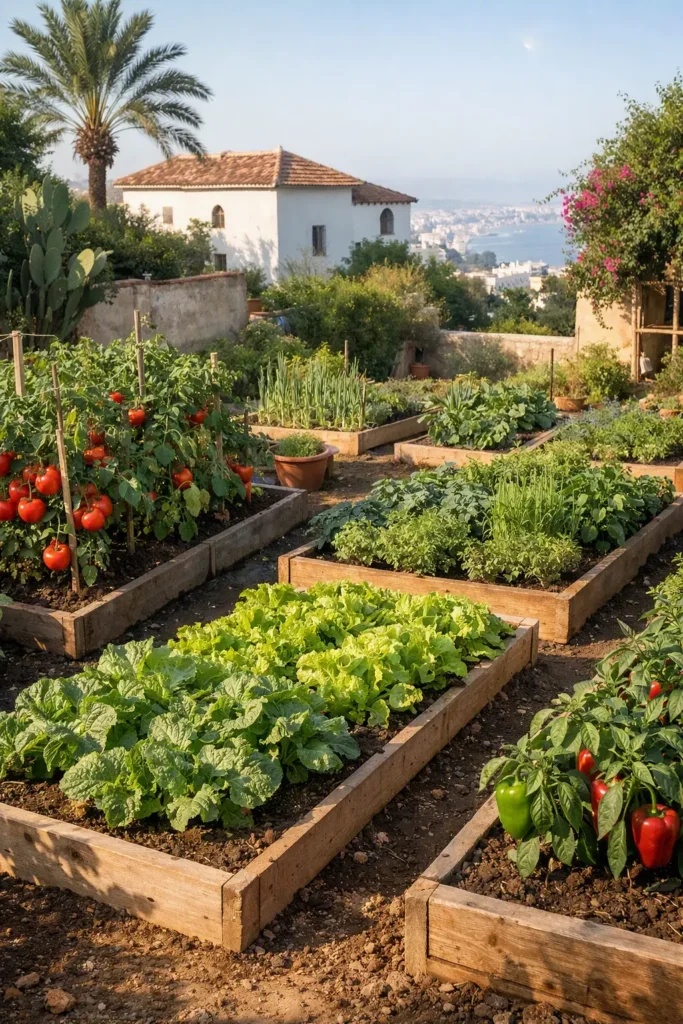
Choose the right location
Selecting the right spot is a vital step for anyone starting their Vegetable Gardening in Tangier journey.
Most fruiting vegetables need plenty of direct sunlight.
Choose an area that:
- receives several hours of direct sunlight;
- has good drainage;
- is reasonably protected from strong wind;
- has easy access to water;
- is close enough to your home to make regular maintenance convenient.
If your garden receives limited sunlight, consider leafy vegetables and herbs rather than expecting every crop to perform like a full-sun tomato or pepper plant.
Prepare the soil
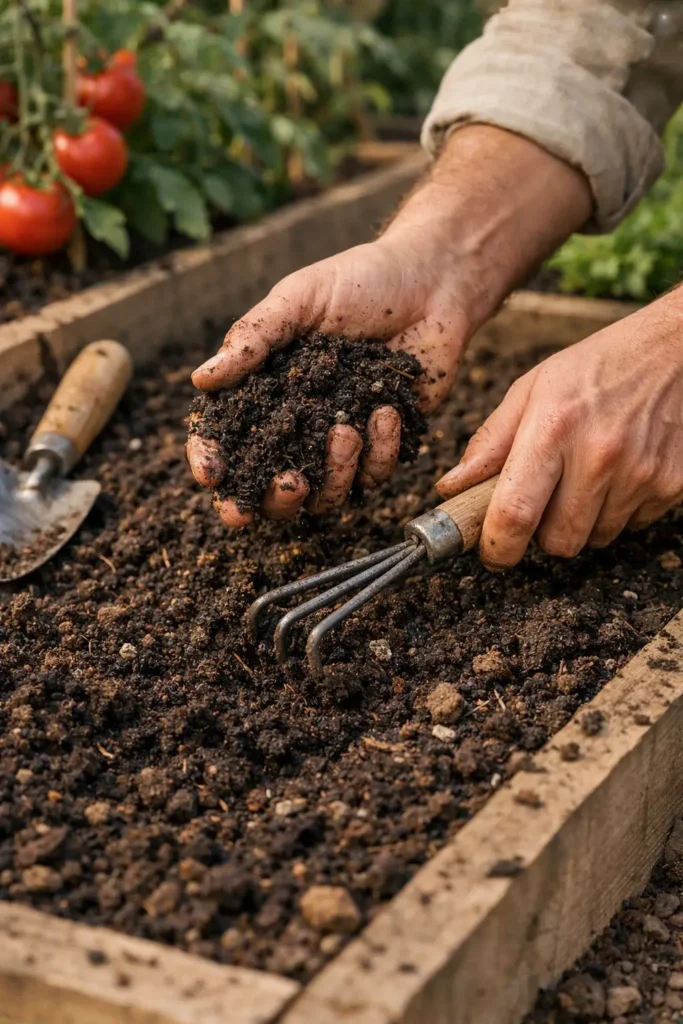
Healthy soil is one of the foundations of productive vegetable gardening.
Before planting, examine the soil:
- Is it compacted?
- Does water drain easily?
- Does it contain organic matter?
- Does it dry out very quickly?
- Does it remain saturated after rainfall?
Adding appropriate organic matter can improve soil structure and water management, but avoid assuming that more fertilizer automatically means better growth.
The goal is healthy, well-structured soil, not maximum fertilization.
Decide between seeds and seedlings
Both approaches have advantages.
Seeds are economical and provide a wider choice of varieties. They are particularly useful when you want to grow vegetables directly from the beginning of their life cycle.
Seedlings are often easier for beginners because they give the plant a head start.
For a first vegetable garden, using a combination of both can be practical.
What Vegetables Can You Grow in Tangier?
A successful approach to Vegetable Gardening in Tangier requires knowing which crops fit the local seasons.
The best crops depend on the season, available sunlight, soil and water.
The regional agricultural context provides a useful starting point: tomatoes, potatoes and onions are among the vegetable crops documented in the wider region.
For a home garden, you can also consider a wider selection.
| Growing conditions | Vegetables to consider |
| Cooler periods | Lettuce, spinach, peas, carrots, onions |
| Warmer periods | Tomatoes, peppers, beans, zucchini |
| Small spaces | Lettuce, herbs, radishes, green onions |
| Beginner-friendly | Lettuce, radishes, beans, zucchini |
This is a planning guide rather than a fixed planting calendar. Local microclimates can shift the best planting window.
Cool-season vegetables
Cooler conditions can be suitable for crops such as:
- lettuce;
- spinach;
- peas;
- carrots;
- onions;
- radishes.
These crops can also help you make productive use of the garden during periods when summer vegetables are not at their best.
Warm-season vegetables
When temperatures rise, gardeners can consider crops such as:
- tomatoes;
- peppers;
- beans;
- zucchini.
Tomatoes and peppers require particular attention to sunlight and consistent soil moisture.
Easy vegetables for beginners
If this is your first garden, do not start with ten different crops.
Choose three or four.
For example:
lettuce + radishes + beans + tomatoes
This gives you experience with different types of vegetables without creating an unnecessarily complicated maintenance schedule.
How to Water a Vegetable Garden
Since rainfall is scarce in summer, mastering irrigation is the most important skill for sustainable Vegetable Gardening in Tangier
Water management is especially important in Tangier because summer rainfall is very low compared with the wetter part of the year.
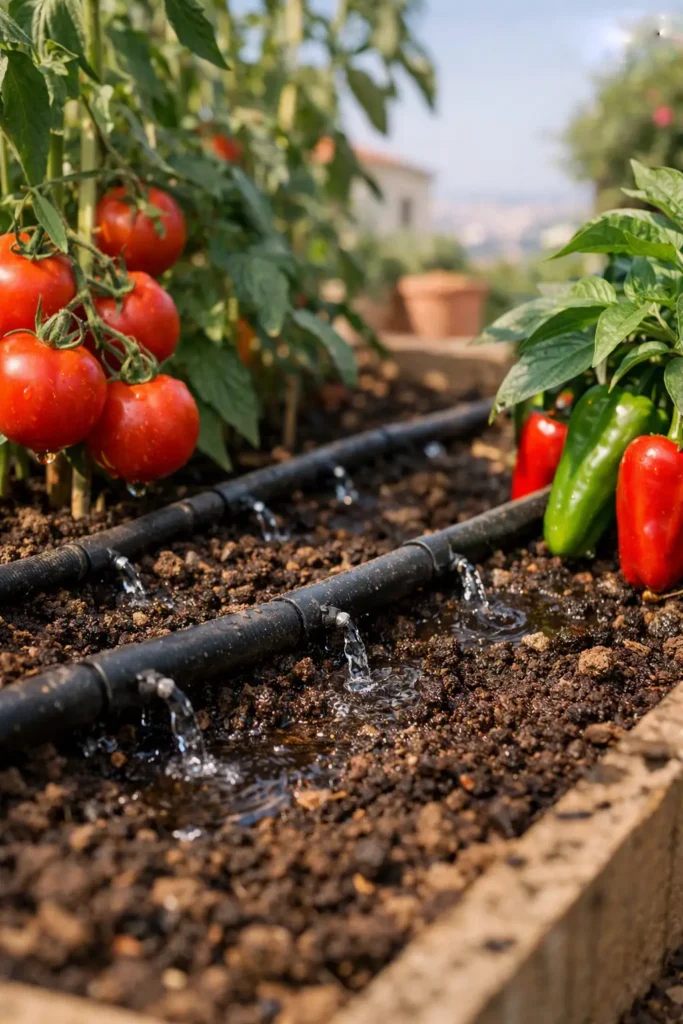
The objective is not simply to water frequently. It is to maintain appropriate and relatively consistent soil moisture.
How to check soil moisture
Do not rely exclusively on the appearance of the soil surface.
The upper layer may look dry while moisture remains below.
A practical method is to check the soil around the root zone with your finger or a small hand tool.
Extension guidance also recommends checking soil moisture rather than relying on a rigid watering schedule. It notes that soil type and mulch significantly influence how frequently irrigation is required.
Adjust watering through the seasons
Your irrigation routine should change throughout the year.
During wetter periods, rainfall may provide part of the required moisture.
During hot, dry weather, irrigation becomes more important. Consistent moisture is particularly important for vegetables because fluctuations in water availability can cause physiological problems and reduce crop performance.
Avoid both extremes:
Too little water: plants can wilt, stop growing or produce smaller fruit.
Too much water: roots may suffer because saturated soil contains less oxygen.
Why mulch helps
A layer of suitable organic mulch can help reduce evaporation and protect the soil surface.
This is particularly useful during hot weather.
Mulch can also reduce weed growth and help moderate soil conditions.
How to Maintain a Healthy Vegetable Garden
Regular monitoring and early pest detection will significantly improve the long-term results of your Vegetable Gardening in Tangier.
Planting is only the beginning.
A productive garden requires regular observation.
Weeding
Remove weeds before they become established.
Regular light weeding is generally easier than allowing weeds to become large and deeply rooted.
Avoid disturbing vegetable roots unnecessarily.
Feed the soil
Think about soil health rather than simply adding fertilizer whenever plants appear weak.
Organic matter can contribute to soil structure and water retention.
If plants repeatedly show nutrient deficiencies, identify the likely cause before applying products.
Monitor pests and diseases
Inspect plants regularly.
Look for:
- damaged leaves;
- unusual spots;
- curled leaves;
- insects;
- weak growth;
- discoloration;
- sudden wilting.
Early detection is usually easier to manage than a serious infestation.
Not every insect or damaged leaf means that a plant is in danger. Good garden management begins with identifying the actual problem before treating it.
Practice crop rotation
If you have enough space, avoid planting the same crop family in exactly the same location repeatedly.
Crop rotation can help reduce the buildup of certain soil-borne pathogens and avoid repeatedly drawing the same nutrients from the soil.
For a small garden, even a simple rotation between different crop groups can be useful.
Vegetable Gardening in Small Spaces
Space limitations do not have to stop your progress; urban Vegetable Gardening in Tangier is perfectly possible with containers and raised beds.
You do not need a large garden to grow vegetables.
Containers
Containers work well for:
- herbs;
- lettuce;
- radishes;
- green onions;
- peppers;
- some tomato varieties.
Choose containers with drainage holes and use a suitable growing medium.
Remember that containers dry out more quickly than garden beds, particularly during hot weather.
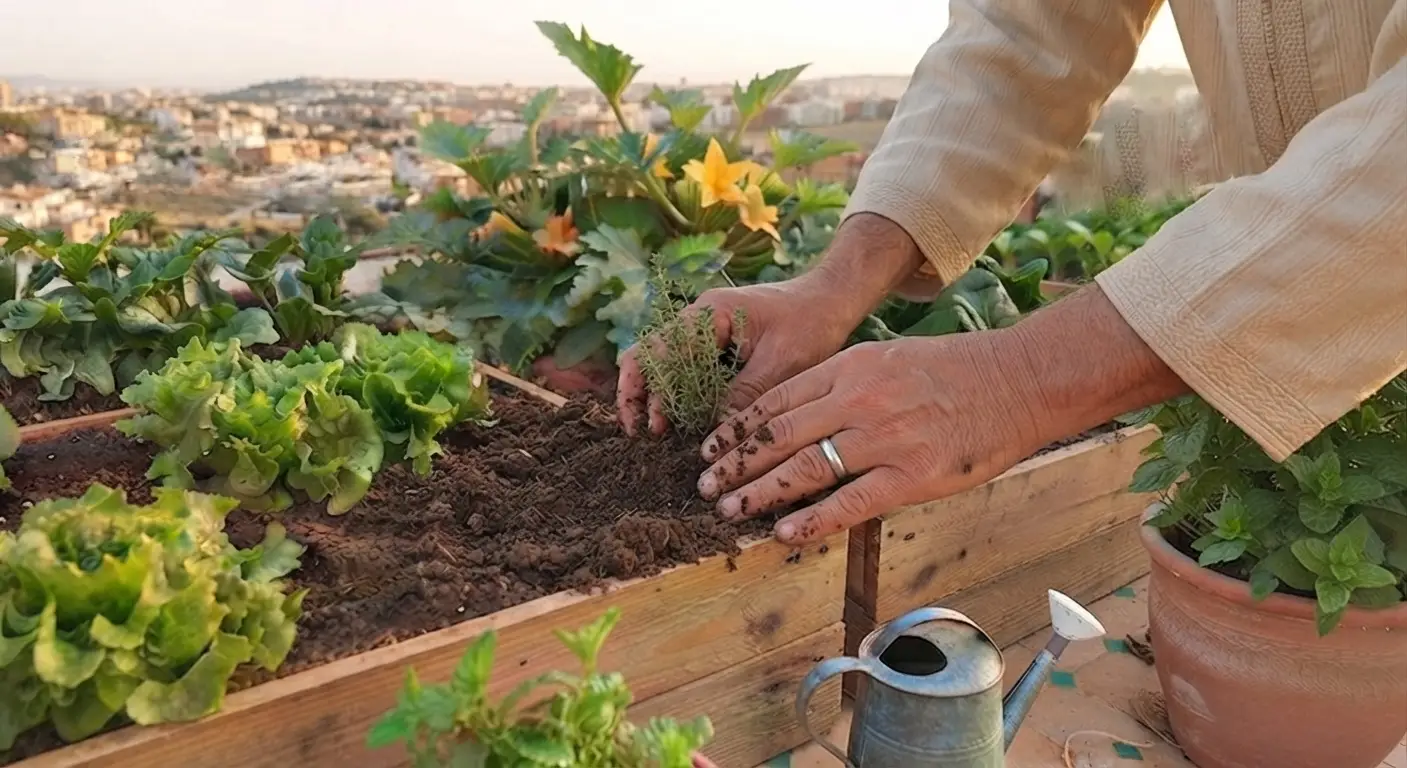
Raised beds
Raised beds can be useful where existing soil is compacted or poorly drained.
They also make it easier to organize crops and manage soil amendments.
However, raised beds still require good irrigation planning.
Vertical growing
Vertical supports can help make better use of limited space for suitable climbing plants.
This can be particularly useful when the garden area is narrow rather than wide.
A Simple Seasonal Approach for Tangier
Rather than treating a planting calendar as a set of rigid dates, use the local climate as your guide.
Cooler and wetter period
Focus on vegetables that tolerate cooler conditions.
This can be a productive period for crops such as:
- lettuce;
- spinach;
- peas;
- carrots;
- onions;
- radishes.
Spring transition
As temperatures rise, begin transitioning toward warm-season vegetables.
This is a good time to prepare beds and plan summer irrigation.
Hot and dry period
Summer requires particular attention to water management.
Choose warm-season crops and monitor soil moisture closely.
Mulching can help reduce water loss.
Autumn transition
As temperatures become milder and rainfall returns, the garden can transition back toward cool-season crops.
This seasonal approach is consistent with the broader agricultural reality of the region, where seasonal vegetable production is an established part of local agriculture.
Common Vegetable Gardening Mistakes
Avoiding common pitfalls is key to mastering Vegetable Gardening in Tangier as a beginner.
1. Planting too many vegetables
A large garden can quickly become difficult to maintain.
Start small.
2. Ignoring sunlight
A vegetable may be perfectly suited to the climate but still perform poorly if the garden does not receive enough direct light.
3. Following a rigid watering schedule
Water requirements change according to temperature, rainfall, soil and plant development.
Check the soil instead.
4. Overwatering
More water does not automatically mean faster growth.
Poor drainage and saturated soil can damage roots.
5. Ignoring the soil
Healthy plants begin with an appropriate growing environment.
6. Treating pests before identifying them
First determine what is causing the damage.
Then choose an appropriate response.
7. Forgetting seasonal transitions
A vegetable garden should evolve with the climate rather than remain identical throughout the year.
Frequently Asked Questions
Many beginners ask questions regarding Vegetable Gardening in Tangier and how to manage irrigation effectively
What is vegetable gardening?
Vegetable gardening is the practice of growing edible vegetables in a garden, raised bed, container or other growing space. It involves selecting suitable crops, preparing soil, planting, watering, maintaining plants and harvesting produce.
What vegetables grow well in Tangier?
Tangier’s climate allows gardeners to work with both cool-season and warm-season vegetables. Suitable options can include lettuce, spinach, peas, carrots, onions, radishes, tomatoes, peppers, beans and zucchini, depending on the season and conditions.
When should I plant vegetables in Tangier?
There is no single planting date for every vegetable. The best time depends on the crop and the local weather conditions. Use the transition between cooler/wetter and warmer/drier periods as a planning guide rather than following a rigid calendar.
How often should I water my vegetable garden?
There is no universal frequency. Check soil moisture and consider soil type, rainfall, temperature, plant size and mulch. During hot, dry periods, vegetables generally need closer monitoring.
Can I grow vegetables in containers?
Yes. Containers can work very well for many vegetables and herbs, especially where garden space is limited. The main considerations are adequate sunlight, drainage, growing medium and consistent moisture.
Is vegetable gardening difficult for beginners?
It does not have to be. Start with a few vegetables that suit your conditions, learn how your soil behaves and develop a simple routine for watering and observation.
Conclusion
Successful vegetable gardening in Tangier is less about having a perfect garden and more about understanding the relationship between season, soil, sunlight and water.
Start small. Choose vegetables appropriate for the season. Prepare healthy soil, monitor moisture instead of following an arbitrary watering schedule, and observe your plants regularly.
The local agricultural context shows that vegetable production is well established across the Tanger-Tétouan-Al Hoceima region, while Tangier’s seasonal rainfall pattern makes water management particularly important for home gardeners.
If maintaining a garden becomes difficult or you need help with regular outdoor maintenance, the next logical step is to explore professional gardening support in Tangier.
Mastering Vegetable Gardening in Tangier is a rewarding journey that connects you deeply with the local Mediterranean climate and sustainable living.